
The JLPT- 2025 July N2
2025 July 22Since Sep 2024 I have been preparing to take the N2 level of the JLPT; the 日本語能力試験!!
A brief overview of my study so far
I have been studying the language for 8 years, and have lived in Japan for about 5 months. I was self taught between 2017 - 2020 and have had a Japanese tutor since 2020. Most of my time studying is spent reading books and news, and playing games in Japanese. I also practise speaking Japanese in lessons and study from textbooks (Big reccomend for Joukyuu he tobira.) My Anki cards are divvied up as such:
- 1,681 Cards - Games
- 1,167 Cards - Reading
- 835 Cards - Situational (Practise tests, irl experiences, job hunting, looking at signs on Google Maps)
- 777 Cards - Lessons
- 93 Cards - Anime
- 60 Cards - Textbook (Outside of lessons)
- 14 Cards - News (I plan on doing more of this)
There are some other cards that aren't in any of these categories, the total is 4,725 words. Before I took the JLPT this was at about 3,800. I only started using this Anki account in 2024, so it isn't a true count of how many words I know.
The exam in Australia
The JLPT is internationally hard to get to.
I thought this was exclusive to Australia before I did some research for this post. In America the exam is only held once a year, and only in some states. It looks like it's held in a lot of countries in Europe, but it is very expensive there, costing £100 (19,800円) in London or €65 - €70 (11,975円) in Italy. In Australia it was $105 AUD (10,150円) to take the N2 exam.
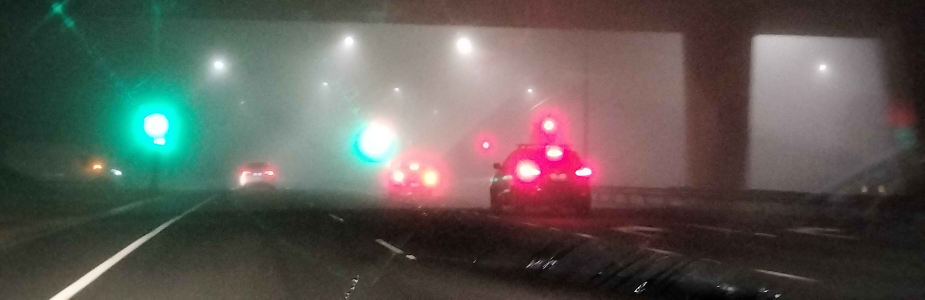
In Australia the exam is hard to take because of how far apart the test sites are; this comes from from being in a very large country with a very small population. The exam is held twice a year, but only at a few select capital cities. This time I took the exam in Canberra, which was a 9 hour drive from Melbourne. The cost of fuel and lodging was much higher than the exam entrance fee itself.
I took the exam with my partner, who tried the N3 level, I will add a link if they decide to post about their experiences with the exam! The vibe from others taking the N3 was "much harder than they expected." They did the driving to the test site and having them around was great company for the exam weekend <3.
We stayed at a very cheap hotel, not much to say there. Canberra had a really good range of gluten free food which was a pleasant surprise; I normally struggle to find somewhere to eat out in Sydney / Melbourne!
Canberra itself is a very strange city, it was constructed to support many more people than the population ended up being. There are a few suburbs, but they are separated by kilometers of Australian bushland. But the bushland was mixed in with European deciduous trees which gave the area a uniquely non-Australian feeling.
The JLPT!
For this section, I'm to focus on info that isn't readily available on the JLPT site.
The exam was held at the Australian National University on a very stormy day, we showed up an hour or so early and they let us read in the exam room before the test. Electronic devices were banned for the duration of the exam, and we had to place our phones in paper envelopes which would be stored at the front of the room. If someone's phone went off they would be disqualified immediately. I read some of the book I've been working through since March; 帝国第11前線基地魔導図書館、ただいま開館中. I really want to set up a "currently reading" and "currently playing" section on this blog, hopefully that'll be up before the next post!

The N2 is broken up into 2 sections, reading/grammar and listening. For me, I ran out of time in the reading/grammar section and had to ham-fistedly guess 4-5 questions right at the end. I definitely reccomend practising reading through things and quickly ascertaining key points without a dictionary, this would have helped me immensly. To prepare I had been focusing on reading and understanding the proper meaning of each sentence, which is great for immersion and knowledge but so, so bad for the test. Another similar downfall of mine was reading too far into what was likely a simple metaphor and losing time trying to figure out the meaning in a literal sense. The same thing happens with English, but I'm much more used to the language so picking them out and comprehending is much much easier.
As for the listening section, it was significantly easier. If you practise speaking Japanese weekly and try shadowing phrases you hear when watching things in Japanese you'll get by very easily! Most of my experience with Japanese is as a spoken language rather than a read one, so I think my opinion is a bit biased here. But if you can understand the things they're saying and jot down important points, the language they use in the speaking sections are very simple so it won't be so bad.
I honestly think the whole "practise the thing and you'll be fine!" idea goes for the whole test, I just failed to prepare for the reading side enough!
Prepping for next time!
Whether I take the N1 (highest level) or the N2 again relies on whether or not I passed the test this time around. The prep I need to do will change drastically depending on this, so I'm going to take it easy and keep up with reading/Anki until I get the results back.
EITHER WAY I would like to be more confident in reading complex passages. To help with this I might try reading more news articles without pulling up a dictionary for everything I don't 100% know. Aside from studying for tests, I have very little confidence in writing Japanese. While I can talk very comfortably, whenever I need to write an email or a text message I'll panic (a bit more than if I have to in English.) I believe this is because it's harder to learn how to write than to how to speak; because you miss out on getting direct and immediate feedback.
If I'm talking to someone face to face I can tell how OK what I said was by the listener's body language, even if they don't tell me directly. If I write an email and someone can understand the general gyst of what I'm trying to convey, they'd normally avoid the trouble of correcting me and just respond as if what I said was fine. I guess i'ts because it feels rude to assume someone wants to know the more "proper" way to say something.
Anyway- for now to improve writing I'm going to start translating the blog as I go (Once I figure out Il8n!)
As for the non-study exam prep; the next exam will be much closer to home, I won't need to worry about any roadtrip/long travel plans! That said I am considering booking a hotel nearby the exam venue, just to save on energy before the test! (Also last time it was close to home I misjudged the timing and didn't make it in time oops!)
TESTING IF THE MAIN BRANCH PUSHES TO THE WEBSITE??